
An inside look at why trans VR porn is exploding in popularity — and why so many straight men are getting pulled into it
Trans VR porn isn’t a niche anymore — it’s one of the fastest-growing segments in immersive adult content. And what surprises most people isn’t the content itself… it’s the audience driving it.
A large portion of that traffic comes from straight-identifying men.
At first glance, that doesn’t seem to line up with traditional assumptions about sexuality. But once you look closer — especially inside a VR headset — the appeal becomes a lot clearer. This isn’t just about curiosity. It’s about how technology, psychology, and visual stimulation combine in a way that standard porn never could.
I spent time digging into the data, the psychology, and speaking with users who regularly watch trans VR content. What came up repeatedly wasn’t confusion — it was consistency.
The Data Behind the Growth
Across major adult platforms, trans categories consistently rank among the most searched. Year-over-year trend reports have shown steady growth, with spikes tied to both increased visibility and better content production.
VR adds another layer.
As more users adopt headsets like the Meta Quest, immersive categories — especially POV-driven ones — are seeing higher engagement and longer session times. Trans VR porn sits right at the intersection of both trends:
- strong visual contrast
- full POV immersion
This isn’t fringe behavior — it’s scalable demand.
What Psychology Actually Says
Researchers have studied this attraction for years under the term gynandromorphophilia — describing arousal toward individuals who present both traditionally feminine and male physical traits.
What’s important is this:
Most of these men are not aroused by male bodies in general.
They’re responding to:
- body language
- facial features
- and the presence of something “unexpected”

That contrast creates a stronger stimulus than either category alone.
In one commonly referenced finding, straight-identifying men who preferred trans women showed arousal patterns closer to heterosexual responses than homosexual ones. In simple terms: they’re reacting to femininity first — not masculinity.
It doesn’t fit neatly into labels, which is why many users don’t try to label it at all.
A Straight User’s Perspective
To understand how this plays out in real life, I spoke with “Mark,” a 34-year-old straight guy working in construction, who started watching trans VR porn about a year ago.
“If you asked me five years ago, I wouldn’t even have clicked on it,” he said.
“But in VR, it hits different. It doesn’t feel like watching anymore — it feels like you’re there.”
What changed wasn’t his identity — it was the experience.
“It’s still a woman to me. The voice, the body, the way she looks at you… that’s what does it. The rest just adds something extra. I don’t overthink it.”
That “something extra” came up repeatedly — not as confusion, but as an added layer of intensity.
Why VR Changes Everything
Traditional porn creates distance. You’re watching through a screen.
VR removes that.
Inside a headset:
- performers are positioned at eye level
- scale feels realistic
- eye contact becomes direct
- movement happens in your personal space
That combination creates a much stronger sense of presence.
In trans VR content specifically, that presence amplifies contrast:
- soft facial features and body language
- combined with more explicit anatomy
- all delivered from a first-person perspective
It’s not subtle — and that’s exactly why it works.
POV direction also plays a major role. When done properly, the performer interacts as if you’re physically there, not just observing. That shift alone changes how users process what they’re seeing.
Several users described it less as “watching a category” and more as “being part of the scene.”
The Role of Novelty and Contrast
From a psychological standpoint, novelty increases dopamine response. The brain pays more attention to things that break patterns.
Trans content does that immediately.
It combines:
- familiar attraction (feminine presentation)
- with something less expected
That contrast creates a stronger initial hook — and in VR, that effect is amplified because the experience feels immediate rather than abstract.
This doesn’t replace other preferences — it adds to them.
For many users, it becomes a recurring category because it delivers a different kind of intensity.
Cultural Shifts Are Lowering Barriers
There’s also a broader shift happening.
Trans visibility has increased across media, and discussions around sexuality are less rigid than they were a decade ago. At the same time, online consumption is private, immediate, and anonymous.
That combination matters.
Users don’t need to explain what they’re watching. They don’t need to label it. They just follow what holds their attention.
As one user put it:
“No one’s asking questions in VR. You just put the headset on and see what you’re into.”
Common Misconceptions
“It means you’re gay.”
Not necessarily. Most users in this category identify as straight or bi, and their attraction is primarily directed toward feminine traits.
“It’s just a fetish.”
For some, yes. For others, it’s simply another category that fits within their existing preferences.
“It’s confusing.”
For most users, it isn’t. The response tends to be straightforward: if it works, it works.
Why This Category Is Growing Fast in VR
Studios are paying attention.
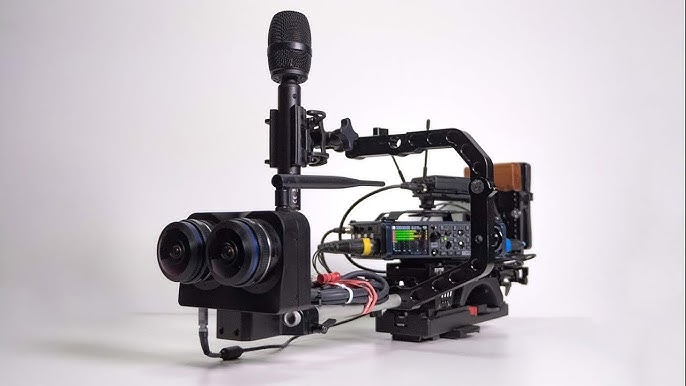
Trans VR content is being produced with:
- higher resolution (6K–8K)
- improved POV direction
- more intentional performer interaction
That results in:
- higher engagement
- repeat visits
From a business perspective, it’s a strong-performing niche with clear demand.
From a user perspective, it’s simple: the experience feels more intense.
Final Take
The rise of trans VR porn isn’t random — it’s the result of multiple factors lining up at once:
- improved VR technology
- increased cultural openness
- and a format that removes distance between viewer and performer
For straight men, it doesn’t necessarily change identity — it expands what triggers attraction under the right conditions.
And VR is that condition.
Once you experience content at that level of immersion, the categories that stand out the most tend to stick — and right now, this is one of them.
If you’re curious, the best way to understand it isn’t to overanalyze it — it’s to experience how different it feels inside a headset.